

Discovering unexplained itchy welts or noticing tiny dark spots on your sheets can trigger immediate anxiety. When you suspect these hitchhiking pests have entered your home, your first instinct is to grab a flashlight and pull back the mattress. However, successful Bed Bug Inspection Detection is rarely as simple as looking at the surface of your bed.

These notoriously elusive insects have spent thousands of years adapting to hide from human eyes. Because they are photophobic—meaning they actively avoid light—and possess incredibly flat bodies, they can squeeze into crevices no thicker than a credit card. To successfully identify an early-stage infestation, you must understand the hidden complexities of how these pests behave and where they actually hide.
Why Surface-Level Visual Inspections Frequently Fail
Many homeowners conduct a quick visual scan of their pillows and mattress seams, find nothing, and assume they are in the clear. Unfortunately, this is one of the most common pitfalls in pest management. Relying solely on a casual glance misses the vast majority of active hiding spots during the early phases of an introduction.
By the time bed bugs are easily visible crawling on top of blankets or outer headboards in broad daylight, the population is already exceptionally high. In the early stages, they remain tightly wedged in deep harborages. Effective Bed Bug Inspection Detection requires looking past the obvious areas and systematically searching the structural micro-habitats of your room.
The Biology of Elusiveness
Bed bugs do not nest like ants or bees; instead, they congregate in tight, hidden harborages near their feeding sources. Their flat, oval bodies allow them to slide behind baseboards, inside electrical outlets, and deep within the internal joints of wooden bed frames. They only emerge when they detect the carbon dioxide and body heat of a sleeping host, usually in the darkest hours before dawn.
The Critical Hotspots Most Homeowners Completely Miss
To conduct a thorough search, you must think beyond the mattress itself. Experienced specialists at Clarity Pest Control know that these insects utilize a wide variety of secondary harborages. If you are inspecting your property, make sure to systematically examine these commonly overlooked areas:
- The Box Spring Dust Cover: The thin fabric mesh stapled to the bottom of your box spring is a premier hiding spot. Bed bugs often gather on the wooden frame underneath this fabric, completely hidden from a top-down view.
- Furniture Joints and Screw Holes: Check the recessed screw holes, dowel connections, and underside brackets of nightstands, headboards, and nearby dressers.
- Wall Encounters and Baseboards: The tiny gap where the carpet meets the baseboard, or where wallpaper has begun to peel slightly, provides the perfect micro-climate for hiding.
- Upholstered Seating: Recliners, sofas, and desk chairs located within fifteen feet of the bed are just as vulnerable as the sleeping area itself.
Understanding the Subtle Signs of Infestation
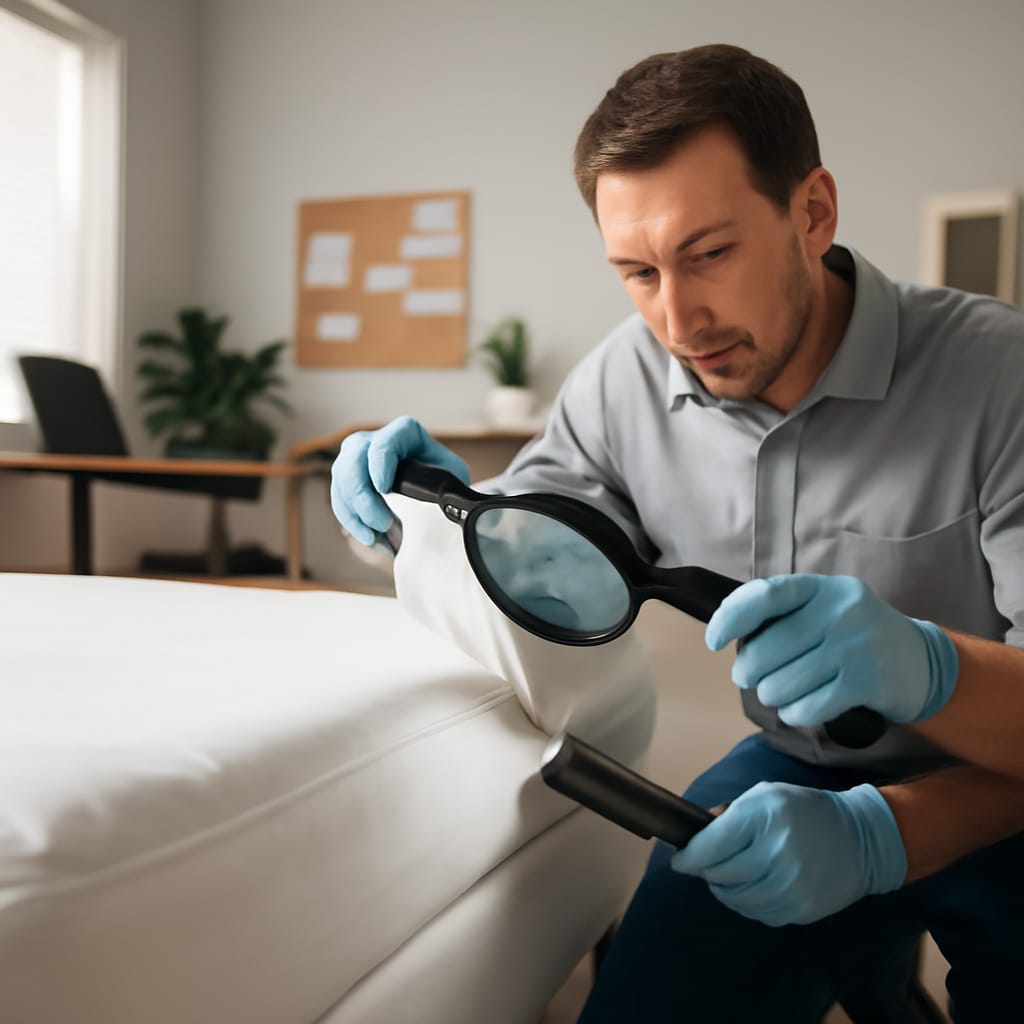
Successful Bed Bug Inspection Detection relies heavily on identifying the indirect evidence these pests leave behind. Because the insects themselves are so adept at hiding, you are far more likely to spot their biological traces before you see a live bug.
Keep a sharp eye out for tiny, dark brown or black spots on fabric surfaces, which are actually fecal deposits left behind after a blood meal. Unlike normal dirt, these spots will smear slightly when touched with a damp cloth. You should also look for translucent, empty skins shed by developing nymphs, as well as tiny, pearly-white eggs tucked securely into rough textures like wood or fabric seams.
Distinguishing Bed Bug Signs from Other Pests
It is easy to mistake carpet beetle larvae, booklice, or spider droppings for bed bug activity. Misidentifying the problem leads to incorrect treatment strategies that waste time and money. Professional diagnostic techniques help differentiate these pests to ensure you apply the correct solution immediately.
The Professional Difference in Bed Bug Inspection Detection
While DIY monitoring tools like climb-up interceptor cups can help catch active nymphs moving between the floor and the bed, they are not foolproof. If a population is nesting directly inside the mattress or headboard, interceptors may not show any activity at all. This is where advanced diagnostic techniques become invaluable.
At Clarity Pest Control, our trained technicians utilize specialized tools, high-intensity magnifying equipment, and deep structural knowledge to locate hidden harborages that untrained eyes simply cannot see. We look beyond the surface to confirm the exact scope of the problem, saving you from the stress of prolonged uncertainty and ineffective self-treatments.
How to Prepare Your Space for a Professional Assessment
If you suspect an infestation and decide to bring in a professional, your immediate preparation steps can make or break the accuracy of the assessment. Many homeowners make the mistake of frantically cleaning, moving furniture, or throwing away bedding before an inspector arrives.
To ensure the most accurate results, experts recommend leaving the room exactly as it is. Moving items to other rooms can accidentally spread the infestation to previously unaffected areas of your home. Avoid vacuuming or using over-the-counter chemical sprays, as these can scatter the bugs deeper into the walls, making successful Bed Bug Inspection Detection significantly more difficult for the responding technician.
If you are struggling with mysterious bites or want to confirm whether a recent travel experience brought unwanted guests into your home, do not wait for the population to grow. Contact Clarity Pest Control today to schedule a comprehensive, professional evaluation of your living space.